



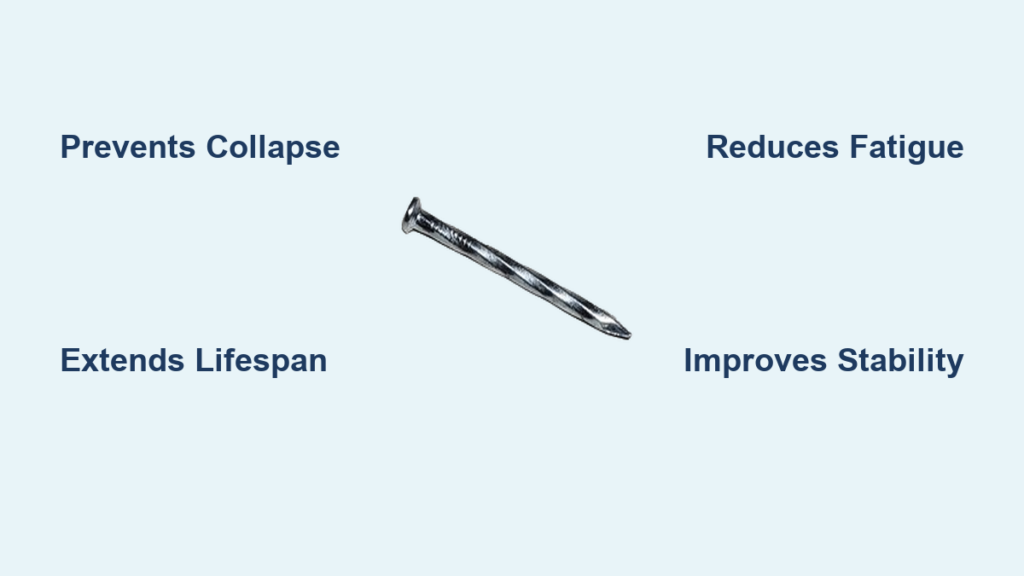
If your boots start sagging in the middle after just a few months of use—or your feet and lower back ache by lunchtime despite thick cushioning—the culprit might not be your insoles or arch supports. It could be something you’ve never even seen: the rigid shank in a shoe. Hidden between the insole and outsole, this slender but critical component acts as the backbone of durable, supportive footwear. While it doesn’t cushion like foam or absorb shock like gel, it provides structural rigidity that keeps your foot stable, your posture aligned, and your boots intact over time.
Found beneath the arch and running from the heel toward the ball of the foot, the rigid shank resists bending and twisting forces during walking, standing, or climbing. It’s especially vital in work boots, hiking footwear, and safety shoes where performance and protection are non-negotiable. Without it, shoes collapse under pressure, leading to fatigue, instability, and premature wear. Understanding what a rigid shank is—and why it matters—can transform how you choose footwear for long-term comfort, safety, and value.
Role of the Rigid Shank in Structural Support
The rigid shank isn’t just a stiff insert—it’s the foundation that holds your shoe together under stress.
Prevents Midfoot Collapse on Hard Surfaces
When you stand or walk on concrete, steel decks, or uneven ground, your body weight presses down on the arch of your foot. Without reinforcement, the shoe’s midsole and upper can bend excessively at this point, creating a “broken-in” sag that compromises support. A rigid shank stops this collapse by acting as a load-bearing beam, transferring pressure from heel to forefoot without letting the arch fold.
This is crucial for workers who spend hours on their feet. A collapsing midfoot forces your plantar fascia and calf muscles to overwork, leading to fatigue, strain, and even long-term injuries like plantar fasciitis. With a proper shank, the shoe maintains its shape, distributing weight evenly and reducing stress on soft tissues.
Extends Boot Lifespan by Reinforcing Sole Integrity
Repeated flexing weakens the bonds between a shoe’s layers. Over time, this leads to midsole delamination, stitching failure, and outsole separation—common reasons boots fail long before their uppers show wear. A rigid shank minimizes flex in the critical midfoot zone, preserving the structural integrity of the entire sole system.
High-quality boots with full or ¾-length shanks often last 3–5 years with proper care, while budget models without adequate shanking may need replacing within a single season. The shank isn’t just about comfort—it’s a durability upgrade that pays off in longevity and long-term savings.
How a Rigid Shank Enhances Comfort and Biomechanics
Contrary to myth, rigidity doesn’t mean discomfort. In fact, the right shank improves comfort by reducing strain across your entire body.
Reduces Foot and Leg Fatigue During Long Shifts
Every step you take requires your foot to roll slightly forward. Without support, your muscles must constantly stabilize the arch, especially on hard surfaces. A rigid shank acts like a passive lever, offloading this effort and reducing muscular fatigue in the feet, calves, and lower legs.
Users report feeling “lighter on their feet” when switching to shanked boots—even after 10- or 12-hour shifts. This isn’t just perception; studies show that increased midsole stiffness alters joint loading patterns, reducing repetitive stress on the knees, hips, and lower back.
Improves Stability on Sloped or Uneven Terrain
For roofers, loggers, wildland firefighters, and hikers, balance is essential. A rigid shank limits torsional (side-to-side) twisting of the sole, keeping your foot flat and secure when stepping on narrow beams, rocky trails, or slippery logs. This torsional rigidity prevents ankle rolls and enhances control during lateral movements.
On a ladder, for example, a stable sole ensures your boot stays locked in place on the rung. Without a shank, the shoe can twist underfoot, increasing the risk of slips and falls—especially when carrying tools or working at height.
Promotes Healthier Gait and Joint Alignment
The shank influences more than just the foot—it affects your entire kinetic chain. By limiting excessive pronation (inward roll) or supination (outward roll), it encourages a smoother, more efficient gait cycle. This alignment reduces wear and tear on joints, helping prevent overuse injuries like shin splints, knee tendinitis, and lower back pain.
Many people notice a reduction in knee or back discomfort within days of wearing properly shanked boots, proving that foot support has systemic benefits far beyond the sole.
Types of Rigid Shank Materials: Strengths and Trade-Offs
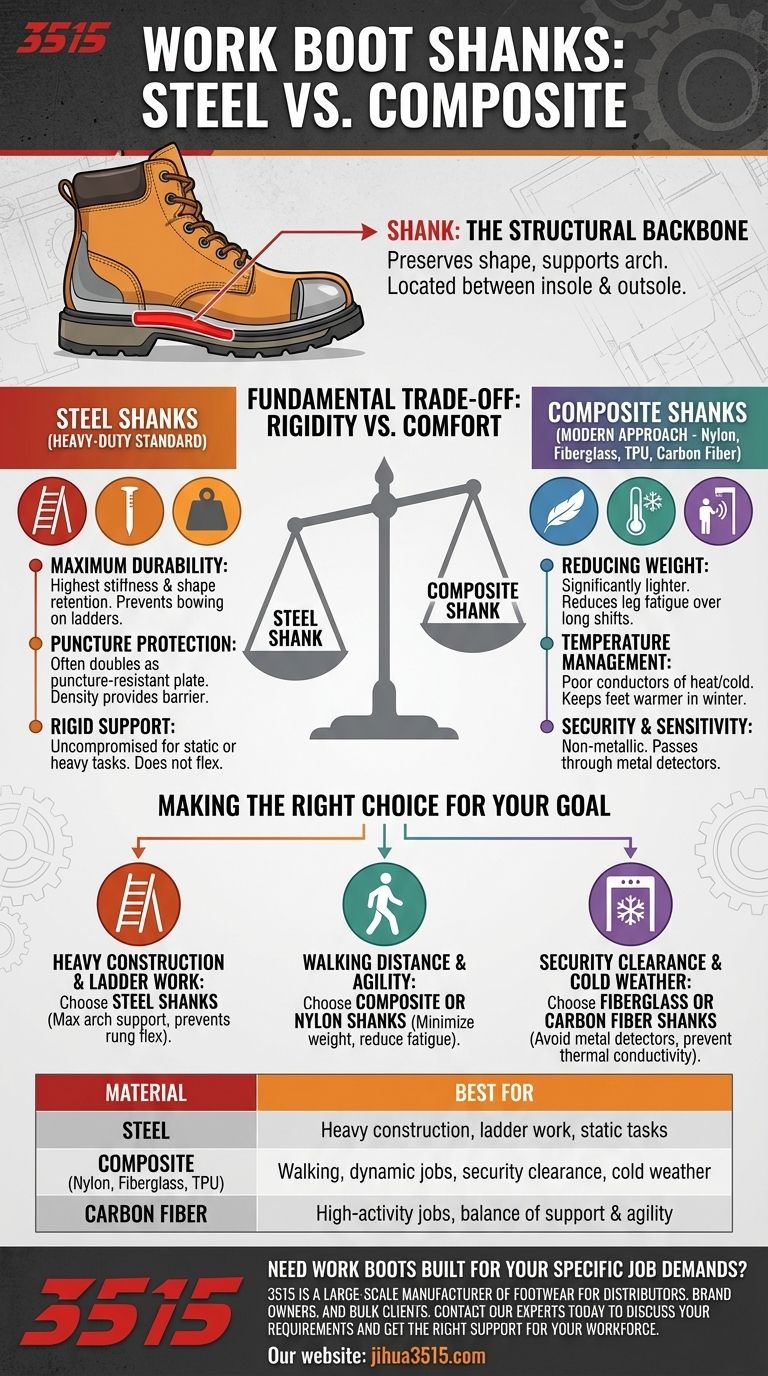
Not all shanks are made equal. Material choice determines weight, conductivity, flexibility, and suitability for specific environments.
Steel Shanks: Maximum Rigidity and Durability
Steel offers unmatched stiffness and longevity, making it ideal for heavy-duty industrial boots. It resists deformation indefinitely and provides limited puncture resistance against nails or sharp debris—though it only covers a narrow strip under the arch.
However, steel conducts cold and electricity, so it’s less suitable for cold climates or electrically hazardous environments. It’s also the heaviest option, adding noticeable weight over long shifts.
Leather Shanks: Molded Support with Natural Insulation
Premium vegetable-tanned leather shanks provide strong, flexible support while gradually conforming to your foot over time. They’re warmer than metal, quieter (no squeaking), and electrically non-conductive—making them ideal for linemen or cold-weather workers.
Though not as rigid as steel, leather shanks offer excellent long-term comfort and are favored in handcrafted boots from brands like Nick’s, Tricker’s, and White’s.
Composite Shanks: Lightweight and Non-Metallic
Made from fiberglass, nylon, or plastic blends, composite shanks deliver moderate stiffness without triggering metal detectors. Lightweight and corrosion-resistant, they’re perfect for security personnel, airport staff, or general laborers.
While not as durable as steel, composites strike a smart balance between strength, safety, and comfort—especially in modern EH-rated (Electrical Hazard) safety boots.
Carbon Fiber Shanks: High Performance, Minimal Weight
Used in advanced hiking boots and elite athletic footwear, carbon fiber is ultra-light yet extremely stiff. It enhances energy return, reduces forefoot pressure, and resists fatigue better than any other material.
Though expensive, carbon fiber shanks improve efficiency during long hikes or runs, making them popular in performance gear from brands like Salomon, Hoka, and On.
TPU and Kevlar-Reinforced Shanks: Tactical Durability
Thermoplastic polyurethane (TPU) is often molded directly into the midsole, offering moderate torsional strength with some flexibility. When reinforced with Kevlar, these shanks add heat resistance, cut protection, and durability—common in tactical, fire-resistant, or military boots.
These materials suit users who need both mobility and protection, such as first responders or law enforcement personnel.
| Material | Rigidity | Weight | Conductivity | Best For |
|---|---|---|---|---|
| Steel | ⭐⭐⭐⭐⭐ | Heavy | Conducts heat/electricity | Industrial, construction |
| Leather | ⭐⭐⭐⭐☆ | Medium | Insulating | Cold weather, EH zones |
| Composite | ⭐⭐⭐☆☆ | Light | Non-conductive | Security, general labor |
| Carbon Fiber | ⭐⭐⭐⭐⭐ | Very light | Non-conductive | Hiking, racing |
| TPU/Kevlar | ⭐⭐⭐☆☆ | Light-Medium | Non-conductive | Tactical, fire protection |
Shank Length: Full, ¾, or Half – What’s Right for You?

The length of the shank determines how much of your foot receives structural support.
Full-Length Shanks: Total Sole Control
Spanning from heel to toe, full shanks offer maximum rigidity. Common in mountaineering boots and heavy-duty logging gear, they eliminate midfoot flex entirely—ideal for extreme loads or technical terrain.
However, they reduce forefoot flexibility, which may feel stiff during casual walking. Best reserved for high-risk environments where stability is critical.
¾-Length Shanks: Balanced Support and Flexibility
Extending from the heel through the arch but stopping before the ball of the foot, ¾ shanks are the most common in quality work and hiking boots. They protect the arch while allowing natural toe-off motion, balancing stability and gait efficiency.
This length suits most users—offering strong protection without sacrificing comfort.
Half-Length Shanks: Minimal Reinforcement
Limited to the heel and rear arch, half shanks provide basic shape retention. Found in dress boots or lightweight casual footwear, they offer little protection on rough terrain.
Not recommended for prolonged standing or industrial use.
How to Test for Shank Quality Before You Buy
You don’t need X-rays to detect a good shank—just a few simple tests.
Bend Test: Check for Arch Rigidity
Hold the heel in one hand and the toe in the other. Try to bend the shoe upward at the arch. A proper shank will resist bending—flex should occur only near the toes. If the shoe folds easily under the arch, it likely lacks a shank.
Twist Test: Assess Torsional Stability
Grip both ends and twist in opposite directions. A strong shank resists twisting. Excessive rotation means poor lateral support, increasing ankle injury risk.
Thumb Press Test: Feel the Firmness
Press your thumb into the insole under the arch. It should feel firm, not soft or spongy. A solid response indicates structural reinforcement.
Stand and Shift: Evaluate Platform Support
Wear the boots and shift your weight side to side. Your arch should stay supported, not collapse inward. If your ankle rolls easily, the shank isn’t doing its job.
Professions That Depend on Rigid Shanks

Certain jobs rely on shanks for safety, stability, and endurance.
- Construction Workers: Need stable platforms on rebar and concrete.
- Linemen and Electricians: Require non-conductive leather or composite shanks.
- Wildland Firefighters: Depend on torsional rigidity on steep, debris-covered slopes.
- Roofers: Need ladder stability and puncture resistance.
- Security and Airport Staff: Prefer non-metallic shanks to avoid metal detectors.
Debunking Common Shank Myths
- Myth: All steel-toe boots have steel shanks.
Truth: Many don’t—always check the specs. - Myth: Steel shanks make boots puncture-proof.
Truth: They offer limited protection; full puncture resistance requires a plate. - Myth: Shanks are uncomfortable.
Truth: They reduce fatigue—leather and composite shanks break in over time. - Myth: Only work boots need shanks.
Truth: Hiking boots, dress shoes, and even running shoes use shanks (e.g., carbon plates).
When a Shank Isn’t Necessary
Some footwear achieves stability through alternative designs:
– Wedge soles (e.g., Red Wing Moc Toes) distribute weight evenly without a shank.
– 360-degree Goodyear welted shoes use stitching for structure.
– Running shoes use carbon fiber plates instead of traditional shanks.
– Lightweight casual shoes prioritize flexibility over rigidity.
Final Verdict: Why the Rigid Shank Matters
The rigid shank may be invisible, but its impact is undeniable. It transforms a shoe from a passive covering into an active support system—protecting your feet, aligning your posture, and extending your boot’s lifespan. For anyone on their feet all day, especially in demanding conditions, a proper shank isn’t a luxury—it’s essential.
Next time you shop for boots, remember: what you can’t see might matter most. Test for rigidity, check the material, and choose wisely. Because when every step counts, your shank should too.
✅ Shank Checklist Before You Buy:
– Material suited to your environment
– Proper length (¾ or full for work/hiking)
– Resists bending and twisting
– Firm under the arch
– Compatible with orthotics
– From a reputable brand (Red Wing, Thorogood, Nick’s, etc.)