


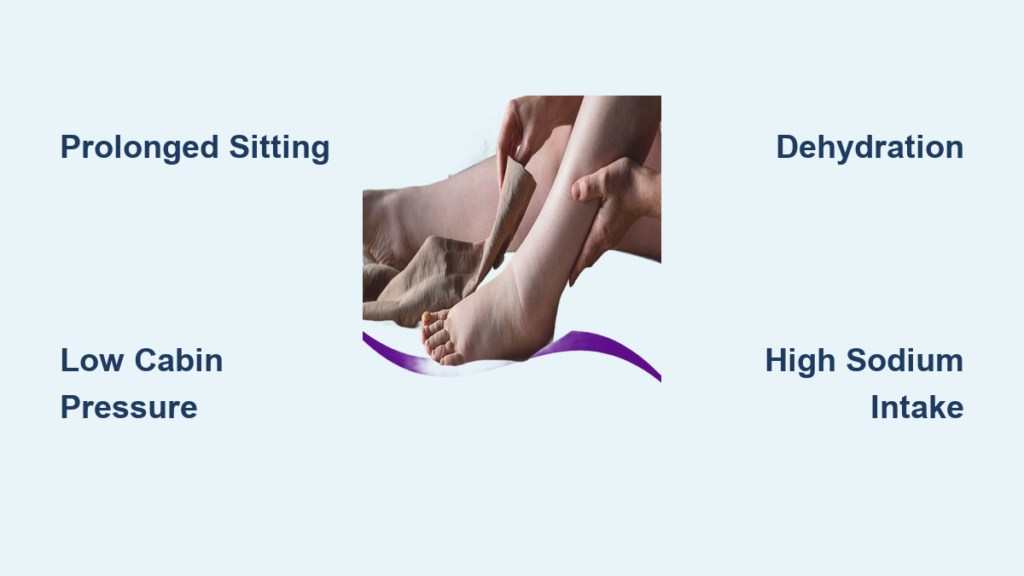
You’ve just stepped off a long-haul flight, excited to begin your journey—only to notice your ankles are puffy, tight, and maybe even tender. You’re not alone. Up to 97% of passengers on flights lasting more than seven hours experience some degree of ankle or foot swelling, a condition known medically as edema. This temporary fluid buildup in the lower legs is usually harmless but can be uncomfortable and, in rare cases, a warning sign of something more serious—like deep vein thrombosis (DVT).
Swollen ankles after flying result from a mix of environmental and physiological factors unique to air travel: low cabin pressure, dry air, cramped seating, and prolonged immobility all work together to disrupt normal circulation. While the swelling typically fades within hours of walking and elevating your legs, understanding the real causes helps you prevent it—and recognize when it’s time to seek medical help.
This guide breaks down every known trigger, from inactivity and dehydration to medication side effects and underlying health conditions, so you can fly with confidence and land feeling light.
Prolonged Sitting and Immobility

Sitting still for hours disables your body’s natural circulation system. Your calf muscles, often called the “second heart,” act as pumps that push blood upward from your legs. When you don’t move, these muscles go quiet, allowing blood and fluid to pool in your lower extremities due to gravity.
Why Inactivity Triggers Swelling
- Calf muscle pump failure: Without regular contractions, venous return slows, increasing pressure in leg veins.
- Cramped seating worsens flow: Tight legroom, crossed legs, or bent knees compress veins, further restricting blood movement.
- Applies beyond flying: Long car, train, or bus rides cause similar swelling due to sustained sitting.
Even healthy travelers notice puffiness after four or more hours of inactivity. The solution? Movement.
How to Stay Active During Flight
- Walk every 30–60 minutes: Take a short walk down the aisle or stretch near the galley.
- Do seated exercises hourly:
- Ankle circles (10 each way)
- Toe raises and heel presses
- Leg extensions and calf lifts
- Choose an aisle seat: Easier access for regular movement.
Pro tip: Set a phone reminder every 45 minutes to stand or stretch.
Low Cabin Pressure Effects
Airplane cabins are pressurized to simulate altitudes of 6,000–8,000 feet, much higher than sea level. This lower pressure causes gases and fluids in your body to expand slightly, impairing circulation and lymphatic drainage.
How Pressure Changes Affect Fluid Balance
- Reduced venous return: Veins struggle to push blood upward against gravity.
- Capillary leakage increases: Lower external pressure promotes fluid seeping into tissues.
- Lymphatic flow slows: The system that clears excess fluid becomes less efficient.
This effect combines with inactivity and dehydration to create a “perfect storm” for swelling—especially in those with poor circulation or venous insufficiency.
Who’s Most Affected?
- People with weak veins or circulation issues
- Those prone to fluid retention
- Travelers with pre-existing vascular or lymphatic conditions
While you can’t change cabin pressure, movement and compression socks help counteract its impact.
Dry Air and Dehydration
Cabin humidity is shockingly low—only 10–20%, drier than most deserts. This parched environment causes rapid, unnoticed fluid loss through your skin and breath.
Why Dehydration Worsens Swelling
- Thicker blood: Dehydration increases blood viscosity, slowing circulation and raising clot risk.
- Fluid retention response: Your body senses low volume and holds onto water, worsening edema.
- Alcohol and caffeine amplify loss: Both are diuretics, increasing urine output and dehydration.
Even mild dehydration can impair vascular function and make swelling worse.
How to Stay Hydrated
- Drink water regularly: Aim for 8 oz (240 ml) per hour.
- Avoid alcohol and caffeine: Skip the in-flight wine or coffee.
- Start hydrating 24 hours before: Begin the day before your flight.
- Use a refillable bottle: Fill it after security to stay on track.
Warning: Drinking water won’t fully prevent swelling—but being dehydrated makes it significantly worse.
Gravitational Fluid Shift

Gravity pulls fluids downward, and during long flights, especially in upright seats, blood and interstitial fluid accumulate in your feet and ankles.
Why Sitting Makes It Worse
- No muscle activity to counteract gravity
- Dependent positioning increases hydrostatic pressure in leg veins
- Fluid leaks into tissues when capillary resistance is exceeded
This is called dependent edema and is most visible after prolonged immobility.
How to Counteract Gravity
- Elevate your feet: Use an empty seat or carry-on if possible.
- Wear compression socks: They apply graduated pressure to prevent pooling.
- Perform seated leg lifts: Helps shift fluid back toward the core.
Visual cue: If your sock leaves a deep indent, that’s pitting edema—a sign of fluid buildup.
High Sodium Intake
Airline meals and snacks are often loaded with salt. A single in-flight meal can contain over 1,500 mg of sodium—more than half the daily recommended limit.
How Salt Promotes Swelling
- Osmotic fluid retention: Sodium pulls water into the bloodstream, increasing blood volume.
- Higher capillary pressure: More fluid is forced into surrounding tissues.
- Worsens existing edema: Combines with inactivity, low pressure, and dehydration.
Even a salty pretzel or cocktail can trigger noticeable puffiness in sensitive individuals.
Smart Food Choices
- Avoid processed snacks: Chips, nuts, and crackers are high in salt.
- Choose low-sodium options: Opt for fresh fruit or plain meals if available.
- Drink extra water: Helps flush excess sodium.
- Skip the tomato juice: It’s notoriously high in salt.
Pro tip: Bring your own snacks like bananas, apples, or unsalted trail mix.
Lymphatic System Slowdown
The lymphatic system drains excess fluid from tissues. Changes in cabin pressure and prolonged sitting can slow lymphatic flow, especially in those with underlying inefficiencies.
Signs of Lymphatic Impairment
- Swelling that lingers after travel
- Heaviness or tightness in legs
- Recurrent puffiness after minor immobility
Occupational therapist Linda Hodgkins describes the system as “a bunch of tiny drains” that get sluggish under travel stress.
How to Support Lymphatic Flow
- Move regularly: Muscle contractions help pump lymph fluid.
- Massage legs upward: Use firm strokes from ankle to thigh.
- Wear compression garments: Aid both venous and lymphatic return.
- Stay hydrated: Supports overall fluid transport.
Persistent swelling may suggest early lymphedema, which needs medical evaluation.
Hormonal and Vascular Factors
Hormonal fluctuations and pre-existing vascular conditions increase your risk of swelling—even with minimal travel exposure.
Who’s at Higher Risk?
- Pregnant women: Blood volume increases by up to 50%, and the uterus compresses pelvic veins.
- People on hormonal medications: Birth control pills and HRT increase clotting risk and fluid retention.
- Menstrual cycle phases: Some women retain more fluid pre-period.
- Chronic venous insufficiency (CVI): Damaged vein valves allow blood to pool.
- Varicose veins: Visible signs of poor venous return.
These conditions reduce your body’s ability to manage fluid shifts during flight.
What You Can Do
- Wear compression socks: Especially important if you have CVI or varicose veins.
- Consult your doctor before flying: If pregnant or on hormone therapy.
- Monitor symptoms: One-sided swelling needs urgent evaluation.
Did you know? Pregnancy increases DVT risk four- to fivefold during air travel.
Medication-Related Fluid Retention
Certain common medications can cause or worsen ankle swelling by altering kidney function or blood vessel tone.
Drugs That Cause Edema
- Calcium channel blockers (e.g., amlodipine) – up to 10% of users develop leg swelling
- NSAIDs (e.g., ibuprofen, naproxen) – promote sodium retention
- Corticosteroids – increase fluid and salt retention
- Hormonal contraceptives – elevate clotting factors and fluid volume
- Some antidepressants (e.g., mirtazapine) – cause weight gain and edema
If you’re on any of these, talk to your doctor about travel risks.
Can You Still Fly?
Yes—but take extra precautions:
– Start hydration early
– Wear compression socks
– Move more frequently
– Monitor for asymmetry or pain
Never stop medication without medical advice, but be aware of its effects.
Key Risk Factors for Severe Swelling
Not everyone swells equally. Certain factors dramatically increase your risk of significant edema or DVT.
| Risk Factor | Why It Matters |
|---|---|
| Age over 60 | Weaker veins, reduced muscle tone, slower circulation |
| Obesity | Higher fluid volume, abdominal pressure impairs blood return |
| Recent surgery | Immobility and inflammation boost clot risk |
| Heart, kidney, or liver disease | Impaired fluid regulation |
| History of DVT | Recurrence risk is high during long flights |
| Smoking | Damages blood vessels and increases clotting tendency |
CDC warning: Any travel over four hours—by air, car, or train—increases DVT risk.
Benign Edema vs. DVT: How to Tell
Most post-flight swelling is harmless. But sometimes, it’s a sign of deep vein thrombosis (DVT)—a medical emergency.
Normal Swelling (Benign Edema)
- Affects both legs equally
- Mild puffiness, may feel tight
- No pain or warmth
- Resolves within 24–48 hours
- Improves with walking and elevation
Warning Signs of DVT
- Swelling in one leg only
- Pain or cramping in the calf or thigh
- Warmth or redness in the affected area
- Skin discoloration (red or blue tint)
- Worsening swelling after landing
Critical: A DVT clot can break loose and cause pulmonary embolism (PE)—a life-threatening lung blockage.
Symptoms of Pulmonary Embolism
- Sudden shortness of breath
- Chest pain that worsens with breathing
- Coughing up blood
- Rapid heartbeat
- Dizziness or fainting
Act fast: Call emergency services immediately if you suspect PE.
Recovery Timeline and Relief
Most travelers see improvement within hours of landing.
How Long Does Swelling Last?
- Mild cases: Resolve in a few hours
- Moderate swelling: Takes 1–2 days
- Persistent beyond 72 hours: Needs medical review
Fast Relief Strategies
- Walk immediately after landing
- Elevate legs above heart for 15–30 minutes
- Wear compression socks post-flight
- Apply cold compress for 10–15 minutes
- Massage upward from ankle to knee
- Hydrate and avoid salt
Pro tip: Book a walkable connection—no sitting in lounges.
When to See a Doctor
Seek immediate care if:
– Swelling is in one leg only
– You have calf pain, warmth, or redness
– Shortness of breath or chest pain occurs
Schedule a checkup if swelling:
– Lasts more than 3 days
– Happens on every flight
– Doesn’t improve with compression
A vascular specialist can test for chronic venous insufficiency or lymphedema.
Final Note: Swollen ankles after long flights are common, but not something to ignore. Most cases stem from inactivity, low cabin pressure, dehydration, and high salt intake—fixable with movement and smart habits. However, one-sided swelling with pain could be DVT, a dangerous clotting condition. Know the signs, take prevention seriously, and when in doubt, get it checked. Fly safe, stay mobile, and land feeling light.