





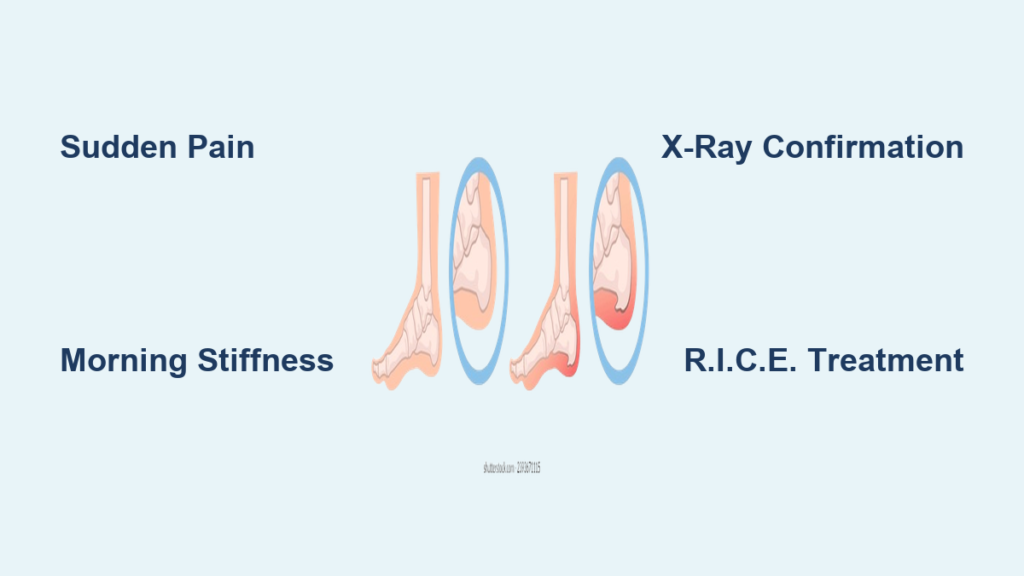
If you’re wincing with every step and wondering why your heel feels like it’s been stabbed or ached for weeks, you’re not alone. Heel pain affects millions, and two commonly confused culprits are heel spurs and stone bruises. Though both cause discomfort under the heel, they stem from entirely different causes—one develops slowly over time, the other strikes suddenly after trauma. Mistaking one for the other can lead to ineffective treatment and prolonged pain.
A heel spur is a bony growth that forms on the underside of the heel bone due to long-term strain, often linked to plantar fasciitis. It’s invisible to the eye and usually found only on an X-ray. In contrast, a stone bruise is a deep soft tissue injury caused by stepping on something hard or repeated impact—like running on concrete—resulting in sharp, localized pain that feels like walking on a pebble.
Understanding the difference between these conditions is essential for proper healing. This guide breaks down how to distinguish them by onset, symptoms, causes, and treatment. You’ll learn when to stretch and support your foot—and when to rest, ice, and protect it. Whether you’re a runner, on your feet all day, or just stepped barefoot on a toy, this information will help you identify your heel issue and get back to pain-free movement faster.
Pain Onset: Sudden vs Gradual
The timing of your pain is one of the most telling clues in identifying whether you’re dealing with a heel spur or a stone bruise.
Sudden Pain After Injury? Likely a Stone Bruise
If your heel pain started within hours or a day after stepping on a rock, toy, or uneven surface, or followed intense activity like sprinting or jumping, you likely have a stone bruise. This condition arises from direct trauma that compresses the protective fat pad beneath the heel, damaging small blood vessels, nerves, and connective tissue.
You may remember the exact moment it happened: “I jumped off the step barefoot” or “I dropped a heavy box on my foot.” The pain is immediate or appears within 48 hours, feels sharp and deep, and worsens when pressure is applied. Unlike other injuries, there may be no cut or broken skin—just a persistent ache that makes walking unbearable.
Slow, Worsening Discomfort? Think Heel Spur
A heel spur doesn’t announce itself. There’s no injury to recall. Instead, the pain builds gradually over weeks or months. You might first notice a dull ache in your heel, especially first thing in the morning when taking your initial steps. As you walk, the pain eases—but returns after standing too long or walking far.
This slow progression is tied to chronic strain on the plantar fascia, the thick band of tissue supporting your arch. Over time, repeated pulling at its attachment point on the heel bone triggers calcium deposits, forming a bony spur. However, the spur itself isn’t always the source of pain—many people have heel spurs without symptoms. The real issue is often plantar fasciitis, the inflammation that precedes or accompanies the spur.
Symptom Comparison: What It Feels Like
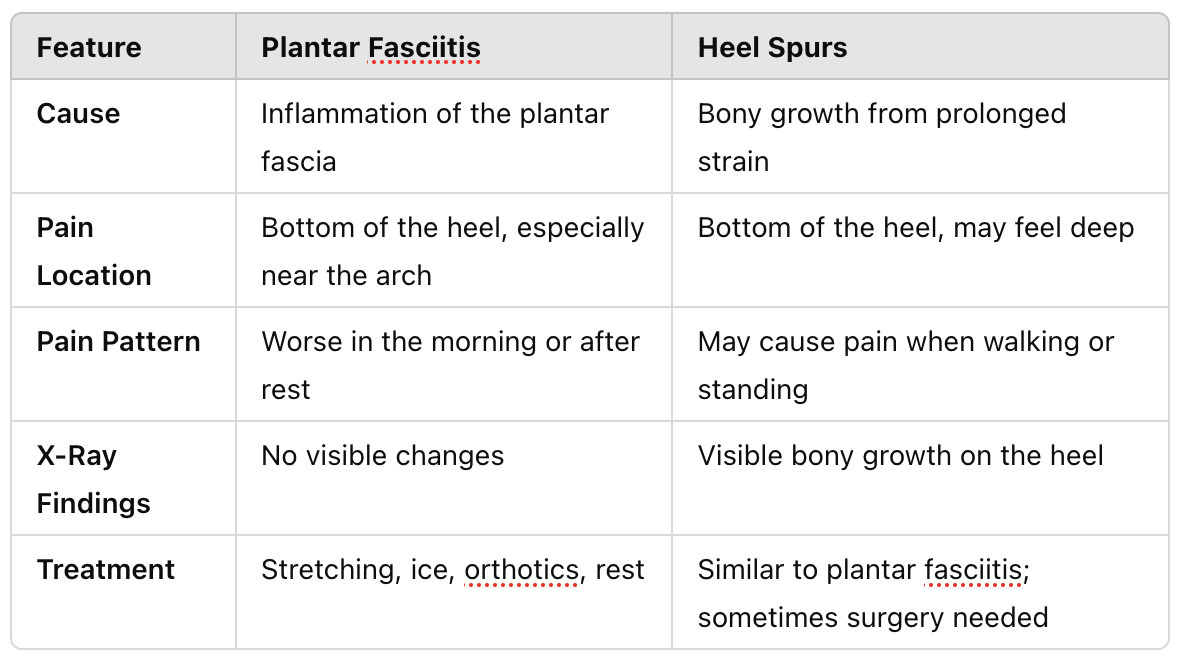
Heel Spur Symptoms
Dull, Aching Pain With Morning Stiffness
Heel spur-related pain (typically from associated plantar fasciitis) is described as a deep, dull ache at the bottom front of the heel. It’s most intense after rest—especially upon waking—because the plantar fascia tightens overnight. Movement loosens the tissue, so pain improves with walking, only to return later in the day.
No Visible Signs
There’s no bruising, swelling, or redness. The skin looks normal, though the entire underside of the heel may be tender to the touch. The discomfort is spread out rather than pinpoint.
Intermittent and Activity-Linked
Pain may come and go. You might feel fine for days, then experience flare-ups after wearing unsupportive shoes, standing for hours, or increasing your activity level.
Stone Bruise Symptoms
Sharp, Localized Pain With Pressure
A stone bruise causes intense, stabbing pain exactly where the injury occurred. It hurts most when you press on the spot or walk barefoot on hard floors. Many describe it as “walking on a marble” or “a nail in the heel.”
Possible Bruising and Throbbing
Though internal, some people develop bluish or purplish discoloration on the sole. The area may throb, especially at night, and feel warm. Nerve irritation can cause tingling or numbness in the heel or arch.
Constant Pain Initially
Unlike a heel spur, the pain doesn’t get better with movement. It’s persistent during the first few days, lasting from a week to several weeks depending on severity.
Cause and Risk Factors
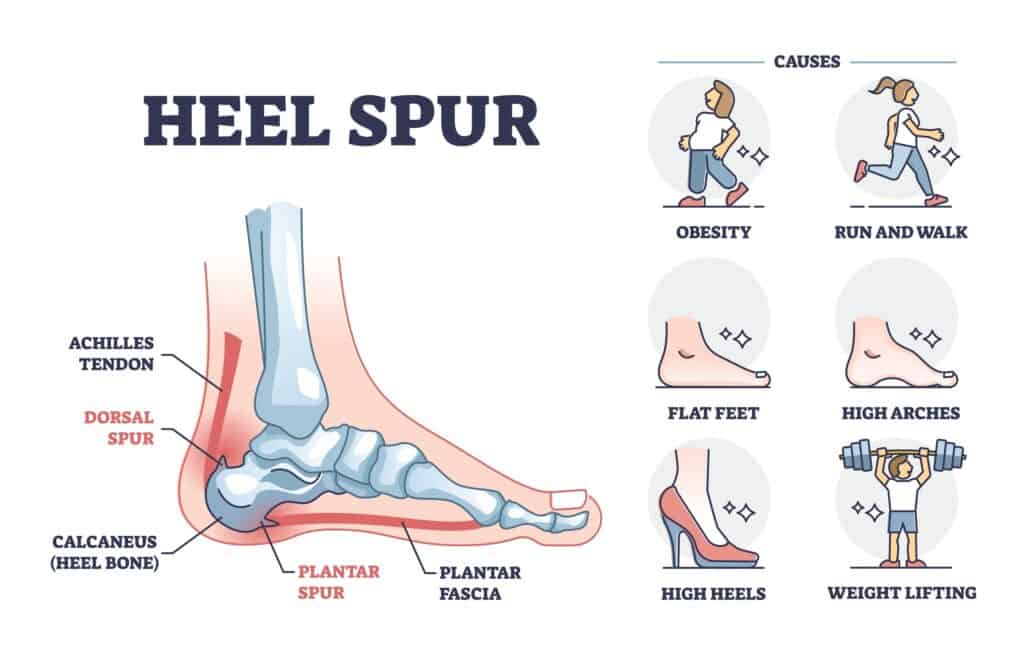
What Causes Heel Spurs?
Chronic Tension on the Plantar Fascia
Heel spurs form due to long-term stress on the plantar fascia. Every step pulls this ligament at the heel, and over time, micro-tears lead to inflammation and calcium buildup. The result is a bony protrusion visible on X-ray.
Linked to Biomechanics and Lifestyle
Risk factors include:
– Flat feet or high arches (alter foot mechanics)
– Overpronation (feet roll inward too much)
– Being overweight (increased load on heels)
– Prolonged standing or walking on hard surfaces
– Wearing worn-out or unsupportive shoes
Runners, teachers, factory workers, and athletes are particularly prone.
What Causes Stone Bruises?
Direct Impact or Repetitive Trauma
A stone bruise results from sudden force to the heel:
– Stepping on a hard object (stone, toy, tool)
– Jumping from a height
– Dropping something on your foot
– Running or marching on concrete
Even minimalist shoes or barefoot walking on rough terrain can cause it.
Risk Increases With Poor Foot Protection
Contributing factors:
– Thin-soled or flat shoes (e.g., flip-flops, dress shoes)
– Lack of cushioning in athletic footwear
– High body weight (compresses the fat pad)
– Aging (natural thinning of heel fat pad)
Military recruits, runners, and those who walk barefoot indoors are especially vulnerable.
Diagnosis: How Doctors Tell the Difference
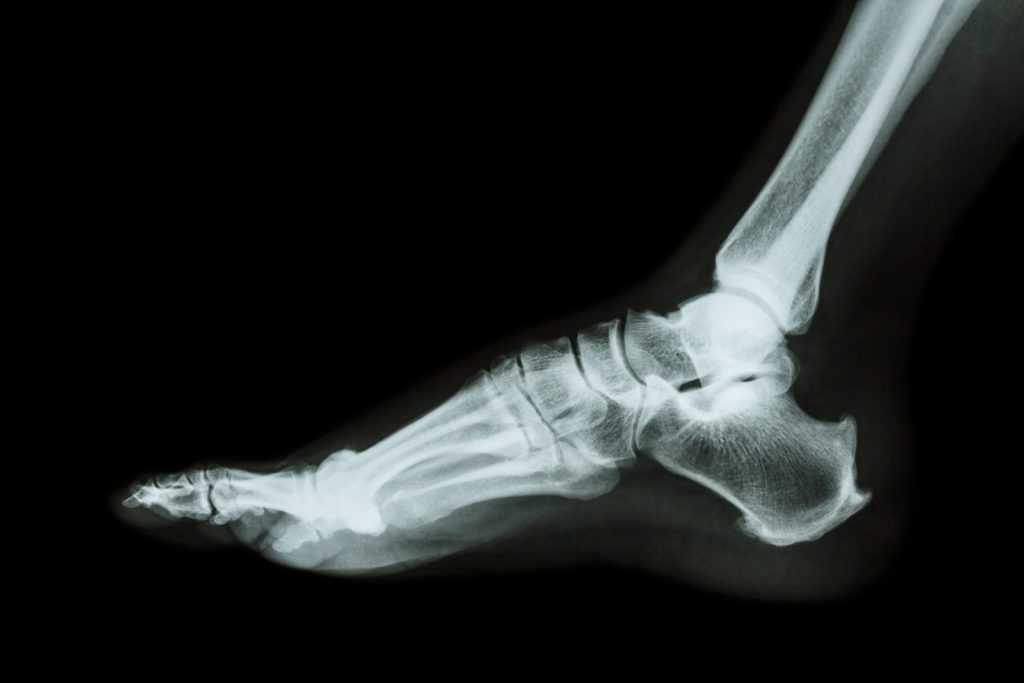
Confirming a Heel Spur
X-Ray Is Required
Only an X-ray can confirm a heel spur. A bony projection extending from the heel bone will appear clearly. However, many people have heel spurs without pain, so finding one doesn’t mean it’s the cause.
Clinical Evaluation Focuses on Pattern
Doctors rely on your symptom history:
– Morning heel pain
– Relief with movement
– No trauma
– Pain linked to activity
If these match, the diagnosis is likely plantar fasciitis, even if a spur is present.
Diagnosing a Stone Bruise
Based on History and Exam
No imaging is needed unless a fracture or stress injury is suspected. A stone bruise is diagnosed through:
– Recent trauma (e.g., “I stepped on a rock yesterday”)
– Localized tenderness on the heel
– Pain worsened by pressure
– Possible bruising
Imaging Rules Out Other Issues
An X-ray may be ordered to rule out a calcaneal fracture. If symptoms persist, an MRI or ultrasound can detect soft tissue damage or rule out stress fractures.
Heel Spur vs Plantar Fasciitis: Clearing the Confusion
Not the Same Condition
Many people use “heel spur” and “plantar fasciitis” interchangeably—but they’re not the same.
- Plantar fasciitis: Inflammation of the plantar fascia ligament.
- Heel spur: A calcium deposit on the heel bone, possibly caused by long-term fascial strain.
You can have one without the other:
– About 10% of people with plantar fasciitis develop heel spurs
– Up to 15% of people have heel spurs with no pain or fasciitis
Treatment Targets the Fascia, Not the Bone
Even if a spur is visible on X-ray, treatment focuses on reducing inflammation and strain on the plantar fascia, not removing the spur. Surgery is rare and only considered after 6–12 months of failed conservative care.
Key treatments:
– Stretching (calf and foot)
– Supportive shoes and orthotics
– Night splints
– Ice and NSAIDs
– Physical therapy
Treatment by Condition
Healing a Heel Spur (With Plantar Fasciitis)
Stretch Daily to Reduce Tension
Tight calves pull on the heel. Do these daily:
– Wall calf stretch: Lean into a wall with one leg back, heel down.
– Towel stretch: Sit with leg straight, loop towel around foot, gently pull toes toward you.
Wear Supportive Shoes and Orthotics
Choose shoes with:
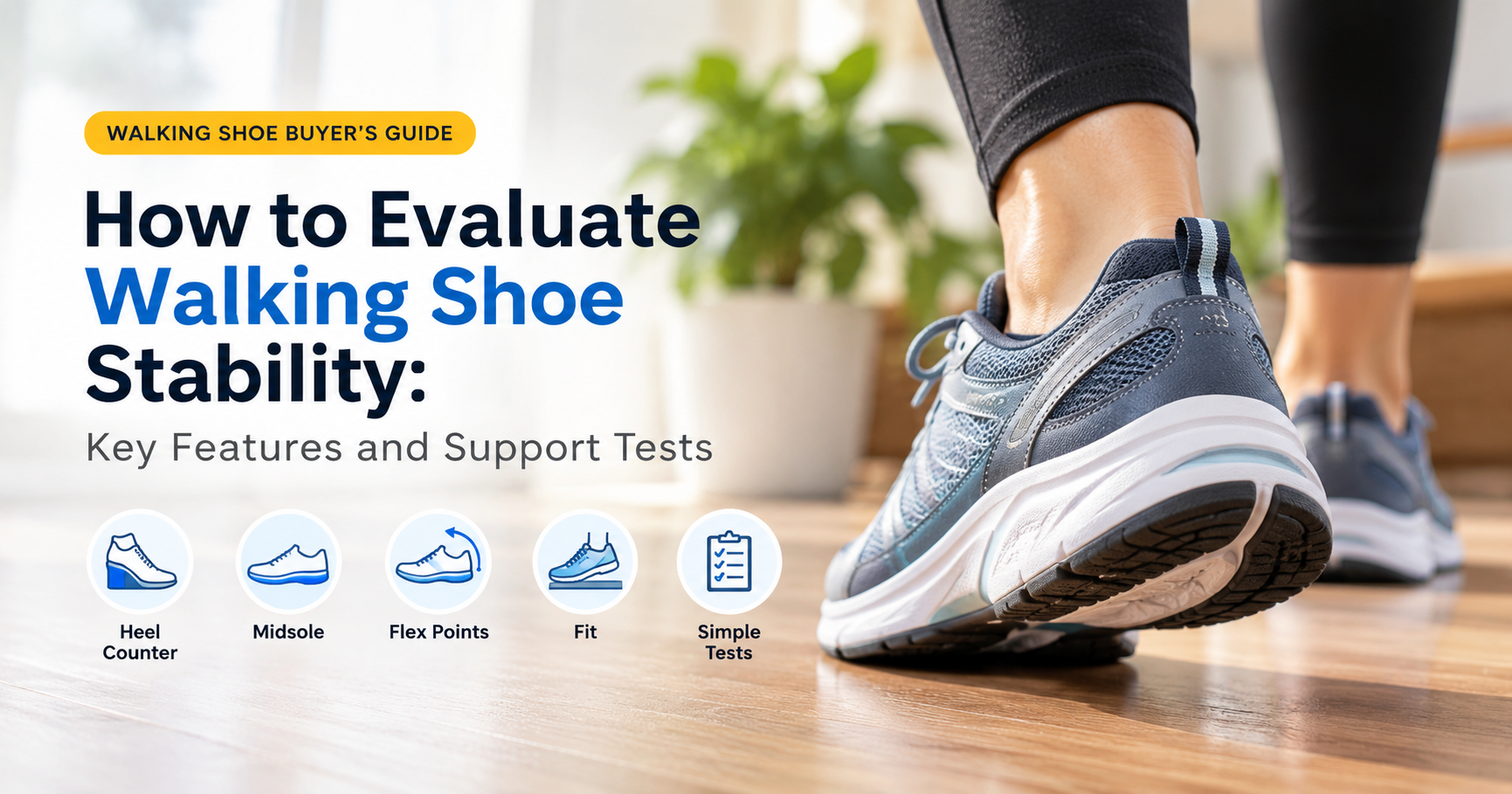
– Firm heel counter
– Arch support
– Cushioned sole
Add over-the-counter insoles or custom orthotics if needed.
Use Night Splints for Morning Pain
These keep your foot stretched overnight, preventing the “first step” pain. Wear for 6–8 hours while sleeping.
Try Advanced Therapies if Pain Persists
- Extracorporeal Shockwave Therapy (ESWT): Stimulates healing with sound waves.
- Cortisone injections: Reduce inflammation (limited use due to risk).
Surgery is a last resort.
Treating a Stone Bruise
R.I.C.E. Method Immediately
- Rest: Avoid weight-bearing.
- Ice: Apply cold pack 10–15 minutes, 3–4 times daily.
- Compression: Use padded sock or wrap if swollen.
- Elevation: Raise foot above heart level.
Protect the Heel With Cushioning
Use gel heel cups or shock-absorbing insoles. Wear thick-soled shoes—never barefoot.
Manage Pain With NSAIDs
Ibuprofen or naproxen reduces pain and inflammation. Take as directed.
Avoid Aggravating Activities
Stay off hard surfaces. Delay running or jumping until pain resolves—returning too soon prolongs healing.
Healing Time and Recovery
How Long Do Heel Spurs Take to Heal?
If painful due to plantar fasciitis:
– 6–12 months with consistent care
– Recovery depends on daily stretching, proper footwear, and activity modification
The bone spur itself doesn’t go away, but pain can resolve completely once inflammation is controlled.
How Long for a Stone Bruise?
- Mild cases: 7–10 days
- Moderate to severe: 2–6 weeks
Healing time varies with:
– Severity of impact
– Body weight
– Footwear choices
– Activity level during recovery
Returning too early can cause recurrence or chronic sensitivity.
Final Note
Heel spurs and stone bruises are not the same—one is a slow-forming bone growth, the other a fast-onset soft tissue injury. While both cause heel pain, their causes, symptoms, and treatments differ significantly. A heel spur often hides behind plantar fasciitis, flaring with morning stiffness and improving with movement. A stone bruise strikes after trauma, bringing sharp, constant pain and possible bruising.
Accurate identification leads to faster healing. Use pain onset, location, and history as clues. Treat plantar issues with stretching and support; treat trauma injuries with rest, ice, and protection. When in doubt, see a foot specialist. Early intervention prevents minor pain from becoming chronic—so don’t ignore your heels.