





If you’ve ever heard a clicking sound in the toes when walking, you’re not alone. This sensation—ranging from a soft pop to a sharp snap—can happen with each step, especially after sitting for a while or during physical activity. While the sound is often harmless, it can sometimes point to an underlying issue that needs attention. Whether it’s painless or accompanied by discomfort, understanding the root cause is essential for knowing when to take action.
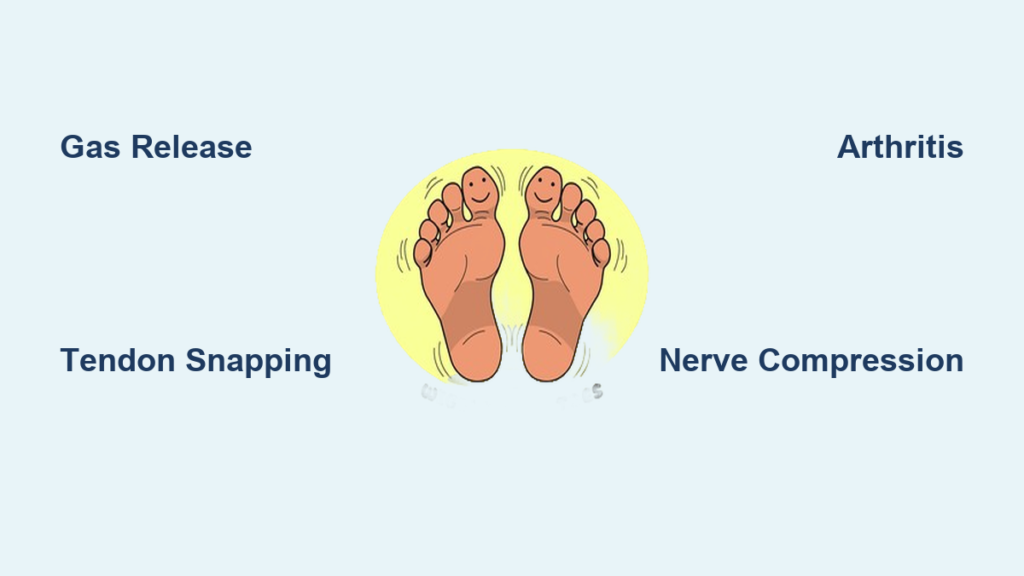
A clicking sound in the toes when walking typically stems from joint movement, tendon motion, or structural changes in the foot. Most of the time, it’s due to benign physiological processes like gas release in the joints or tendons flicking over bones. But when clicking becomes frequent, painful, or is paired with swelling, stiffness, or deformity, it may signal something more serious—like arthritis, injury, or nerve compression.
This guide explores every possible reason behind toe clicking, from the everyday to the medical. You’ll learn how to differentiate harmless popping from warning signs, what tests might be needed, and which treatments can restore comfort and mobility—whether you’re on your feet all day, an active athlete, or just noticing a new sound in your stride.
Gas Release in Toe Joints
One of the most common reasons for a clicking sound in the toes when walking is the natural release of gas within the joint.
Joint Cavitation Explained
The small joints in your toes are filled with synovial fluid, a lubricant that keeps movement smooth. When you bend or extend your toes—especially after being still—the pressure inside the joint shifts rapidly. This sudden change can cause dissolved gases like nitrogen and oxygen to form tiny bubbles that burst, creating a quick popping or cracking noise.
This process, known as joint cavitation, is the same mechanism behind knuckle cracking. It’s completely normal and does not damage cartilage or lead to arthritis, despite popular myths. The sound usually happens only once per motion and won’t repeat until the joint has had time to re-pressurize—typically a few minutes.
You’re most likely to notice this:
– First thing in the morning.
– After long periods of sitting or rest.
– When stretching your toes barefoot.
If the click is painless, infrequent, and doesn’t affect movement, it’s almost certainly harmless.
No Pain, No Problem
Painless toe clicking due to cavitation requires no treatment. There’s no medical concern unless it’s paired with discomfort, swelling, or reduced motion. In fact, many people only become aware of it when they start paying closer attention to foot sensations—often after an injury or increased activity.
✅ Pro Tip: If the pop happens just once per toe movement and doesn’t recur until you pause and move again, it’s likely cavitation—not a sign of damage.
Tendon Snapping Over Bones
Another frequent cause of toe clicking is tendons snapping over bony areas in the foot.
Why Tendons Click
Tendons connect muscles to bones and guide toe movement. They slide through protective sheaths near joints. If a tendon is slightly tight or if there’s a prominent bone—like a metatarsal head or sesamoid—it may catch briefly before snapping back into place, producing a distinct click or flick.
This sound is often:
– Reproducible—happens every time you push off while walking.
– Felt more than heard.
– Rhythmic and localized, usually at the base of the big toe or under the ball of the foot.
Over time, repeated snapping can irritate the tendon, leading to tenosynovitis—inflammation of the tendon sheath—which may cause pain, swelling, or a feeling of catching.
Signs It’s Tendon-Related
You might be experiencing tendon snapping if:
– The click occurs with a sensation of something “jumping” under the skin.
– It worsens in tight shoes or high heels.
– It’s more noticeable during activities like running or climbing stairs.
While usually painless at first, chronic irritation can lead to discomfort—especially if left unaddressed.
Degenerative Joint Damage

When clicking is persistent and painful, joint degeneration may be the culprit.
Osteoarthritis in Toe Joints
As we age or overuse our feet, the protective cartilage in toe joints—especially the MTP joint at the base of the big toe—can wear down. Without smooth cushioning, bones rub together, creating a grating, crunching, or popping sensation (crepitus) during walking.
Unlike the single pop of cavitation, arthritic crepitus often feels rough and may occur throughout the entire motion of stepping. It’s commonly linked to:
– Pain when pushing off.
– Morning stiffness lasting under 30 minutes.
– Visible joint changes like bunions or hammertoes.
– Clicking that worsens with prolonged walking.
Osteoarthritis in the toes often develops after years of stress, poor footwear, or prior injuries.
Risk Factors for Joint Wear
Contributing factors include:
– Previous toe fractures or sprains.
– Flat feet or overpronation, which alter foot mechanics.
– Obesity, increasing pressure on the forefoot.
– Long-term use of unsupportive shoes.
Left untreated, cartilage loss can lead to chronic pain and limited mobility.
Inflammatory Arthritis Types
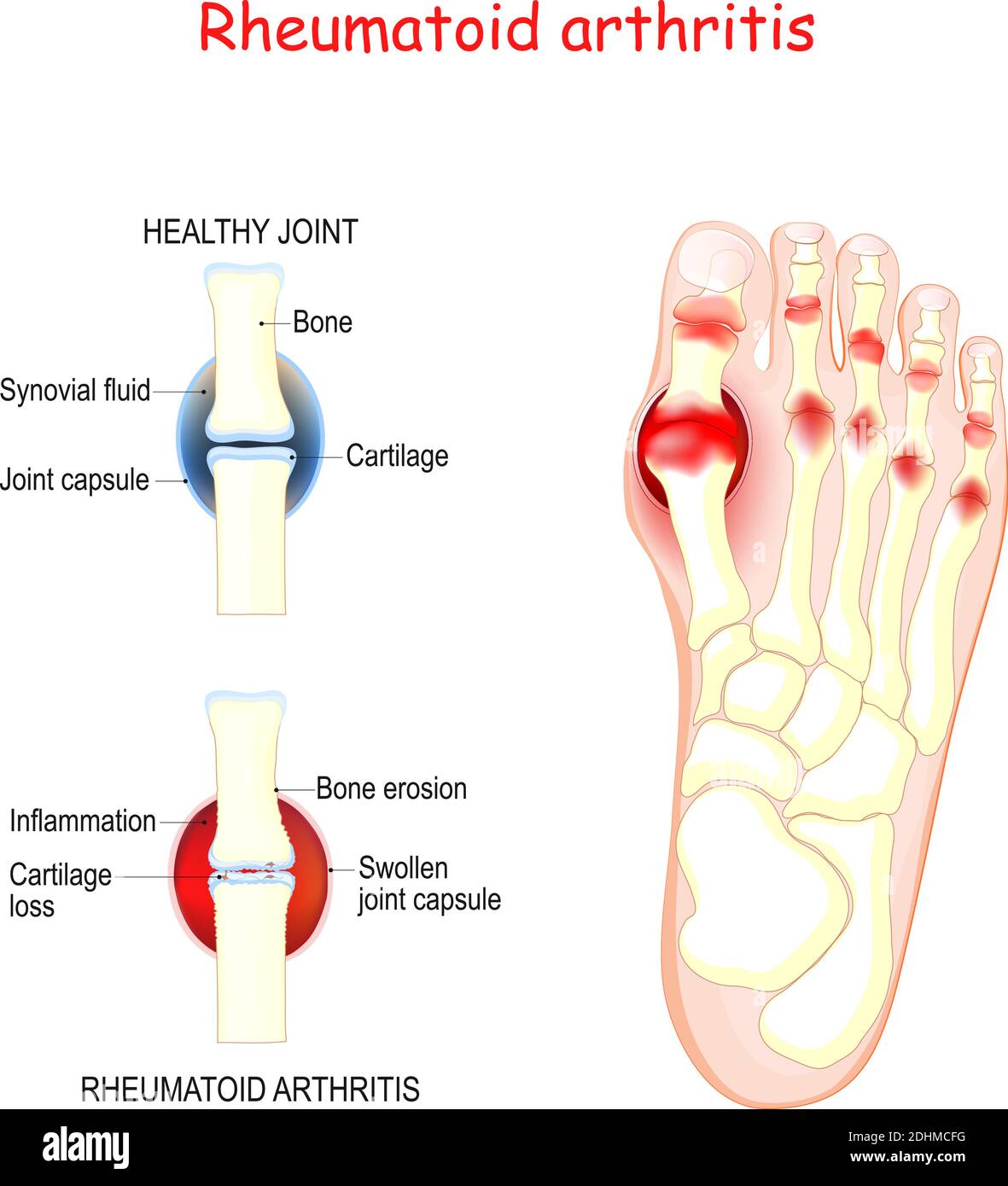
Autoimmune and metabolic conditions can mimic or accelerate joint damage.
Rheumatoid Arthritis (RA)
Rheumatoid arthritis attacks the lining of joints (synovium), leading to swelling, pain, and eventual cartilage destruction. It often affects both feet symmetrically, including multiple toe joints.
Key signs:
– Swollen, warm, red toes.
– Morning stiffness lasting more than 30 minutes.
– Fatigue and systemic symptoms.
– Progressive clicking as joint surfaces erode.
Diagnosis usually involves blood tests (RF, anti-CCP) and imaging like X-rays or ultrasound.
Psoriatic Arthritis
Linked to psoriasis, this form typically causes asymmetric joint involvement and may produce:
– Dactylitis—swollen “sausage toes.”
– Enthesitis, or pain where tendons attach to bone.
– Nail changes like pitting or discoloration.
Crepitus develops later as joint damage progresses.
Gout in the Big Toe
Gout occurs when uric acid crystals deposit in a joint, most commonly the big toe’s MTP joint. Acute attacks bring sudden, severe pain, redness, and swelling—often waking people at night.
Over time, repeated flares cause:
– Bone erosion.
– Joint instability.
– Chronic popping or grinding during movement.
Tophi—chalky deposits under the skin—may also form near affected joints.
⚠️ Note: A history of gout + new-onset clicking warrants evaluation—even without active pain.
Bone Spurs and Joint Misalignment

Structural changes from past injury or wear can alter joint mechanics.
Bone Spurs (Osteophytes)
These bony growths form in response to joint stress or arthritis. When a tendon or cartilage glides over a rough spur, it can create a catching or popping sensation.
Spurs are often found:
– Beneath the big toe joint.
– Along the top of hammertoe deformities.
– Near previous fracture sites.
They may cause localized pain or worsen with shoe pressure.
Joint Instability After Injury
Past trauma—like a dislocation or sprain—can leave behind:
– Scar tissue inside the joint.
– Ligament laxity.
– Subluxation (partial dislocation).
As the joint moves, it may click when slipping in and out of alignment. This is especially common in athletes or those with repetitive foot strain.
Trauma-Induced Clicking
Sudden or repetitive injuries can produce alarming sounds.
Stress Fracture Warning Signs
A tiny crack in a toe or metatarsal bone from overuse may cause:
– Pain that increases with walking.
– Localized tenderness.
– Possible grating or clicking (crepitus) if bone fragments shift slightly.
Crepitus in a fracture is serious—it suggests instability and potential non-union.
❗ Seek imaging if:
– Pain started after increased activity (e.g., running).
– There’s swelling without obvious injury.
– The click is new and painful.
Tendon or Ligament Tears
Stubbing your toe hard or sudden twisting can rupture soft tissues. A snapping sound at the time of injury may indicate:
– Displaced flexor or extensor tendon.
– Complete ligament tear.
Symptoms include:
– Immediate pain and bruising.
– Difficulty moving the toe.
– Feeling of instability.
MRI or ultrasound is often needed for diagnosis.
Joint Dislocation
A full dislocation causes a loud pop, visible deformity, and severe pain. Even after reduction, residual instability may lead to ongoing clicking during movement.
Nerve Compression: Morton’s Neuroma
Though not a joint issue, Morton’s neuroma can mimic toe clicking.
What Is a Neuroma?
It’s a thickened nerve—usually between the third and fourth toes—caused by compression from tight shoes or abnormal foot mechanics.
Patients often report:
– Feeling like a “stone” or “folded sock” under the foot.
– Burning, tingling, or electric shocks in the toes.
– A clicking sensation when walking, due to altered gait or nerve irritation.
The sound isn’t from the joint but may be perceived as such.
Aggravating Factors
- Narrow-toed or high-heeled shoes.
- High-impact activities (running, dancing).
- Pre-existing foot deformities (bunions, hammertoes).
Ultrasound or MRI can confirm the diagnosis.
Footwear and Biomechanical Triggers
Your shoes and walking pattern play a big role.
Poor Shoe Fit
Tight, narrow, or unsupportive footwear increases pressure on toe joints and tendons, encouraging abnormal movement and clicking.
Avoid:
– Pointed toe boxes.
– High heels (shift weight forward).
– Worn-out soles with no cushioning.
Opt for shoes with:
– Wide forefoot.
– Arch support.
– Flexible toe box.
Gait Abnormalities
Conditions like overpronation or flat feet alter how your foot rolls during walking, increasing stress on the toes. This can lead to:
– Excessive joint motion.
– Tendon snapping.
– Premature wear.
Custom orthotics or metatarsal pads can help redistribute pressure.
Hypermobility and Joint Laxity
People with Ehlers-Danlos syndrome or generalized joint hypermobility often experience frequent joint popping due to loose ligaments.
While clicking is usually painless, long-term instability may increase risk of:
– Early osteoarthritis.
– Tendon fatigue.
– Joint subluxations.
Strengthening intrinsic foot muscles can improve stability.
When to See a Doctor
Most toe clicking is harmless—but certain red flags demand evaluation.
Red Flags Requiring Medical Attention
| Symptom | What It Could Mean |
|---|---|
| Pain with clicking | Arthritis, injury, neuroma |
| Swelling or redness | Inflammation, gout, infection |
| Warm joint | Active inflammatory arthritis |
| Reduced motion | Joint stiffness or damage |
| Visible deformity | Bunions, hammertoes, dislocation |
| Locking or catching | Loose body, severe arthritis |
| Sudden “pop” + pain | Fracture, tendon tear |
| Numbness or tingling | Nerve compression (neuroma) |
If you have any of these, consult a podiatrist or orthopedic specialist.
Final Note
A clicking sound in the toes when walking is usually nothing to worry about—especially if it’s painless and occasional. Most often, it’s due to harmless gas bubbles or tendon movement. But when clicking comes with pain, swelling, deformity, or nerve symptoms, it may point to arthritis, injury, or neuroma.
Early assessment by a foot specialist can prevent minor issues from becoming chronic problems. With the right diagnosis and care—from better shoes to targeted therapy—you can keep walking comfortably for years to come.