


Disclosure: This post may contain affiliate links. If you buy through them, we may earn a small commission at no extra cost to you. We only recommend products we believe are genuinely useful.
Most of us pick shoes by style, colour and price. Very few people ask the question that matters most for long-term comfort: does the front of this shoe actually fit the shape of my foot? Understanding the importance of a wide toe box can change how your feet feel at the end of a long day, and it may protect them for years to come.
In this guide you will learn what a toe box is, why a wide toe box matters, how to test it at home, and what to look for before you buy your next pair.
What Is a Toe Box?
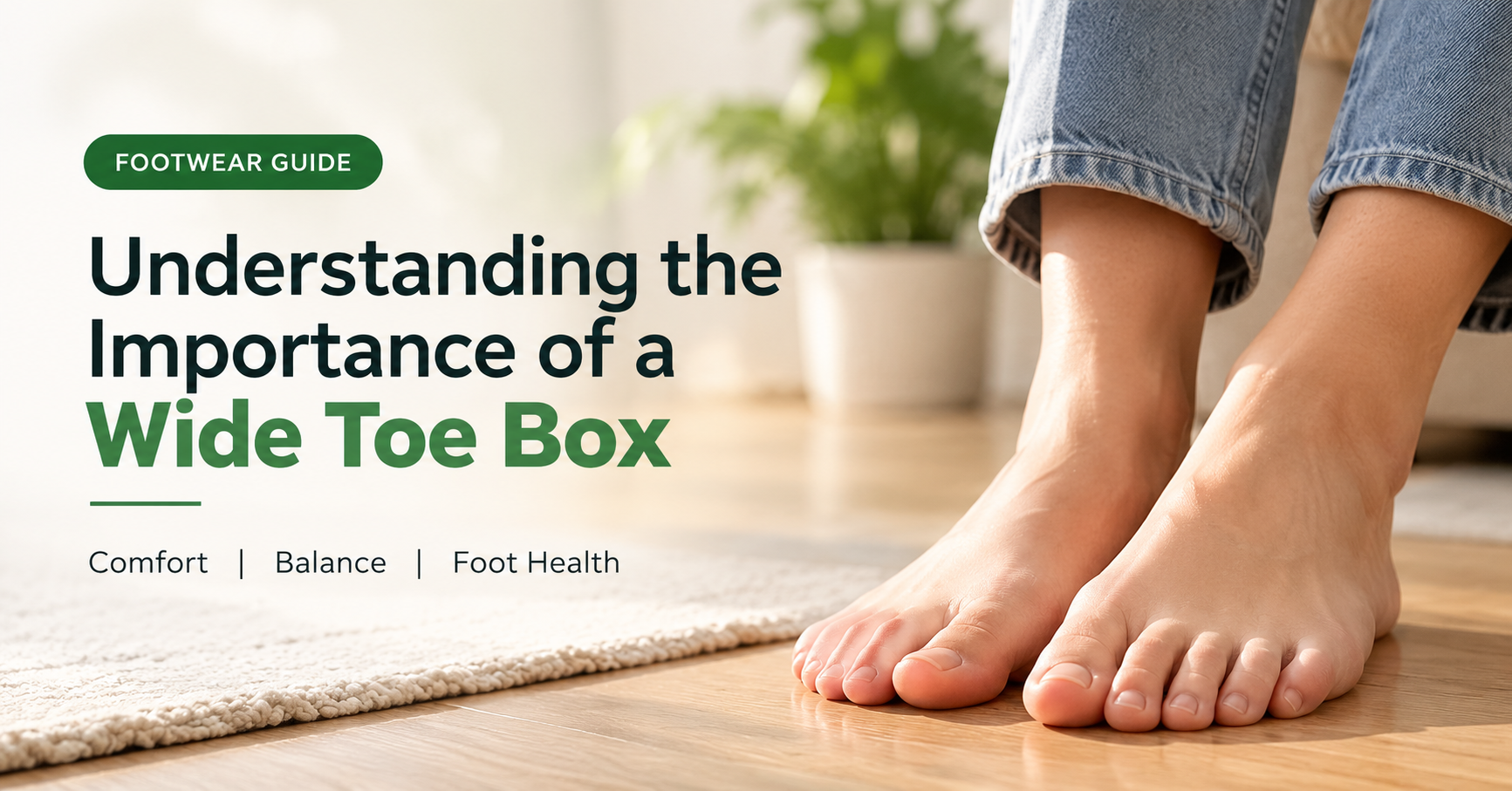
The toe box is the front section of a shoe that surrounds your toes. Its width, height and shape decide how much freedom your toes have. A wide toe box is shaped like a natural foot: it is widest at the toes, not tapered into a point.
Many conventional shoes do the opposite. They narrow towards the tip, which pushes the big toe inward and squeezes the smaller toes together.

Why the Importance of a Wide Toe Box Matters
Your toes are not just decoration. They spread, grip and push off the ground with every step. When shoes restrict them, the whole foot has to compensate.

1. Better Balance and Stability
When your toes can spread, they create a wider, steadier base of support. This helps with balance while walking, running, lifting or simply standing for long periods.
2. All-Day Comfort
Tight toe boxes cause rubbing, pinching, blisters and that familiar burning feeling in the forefoot. Extra room reduces friction and pressure, so shoes feel comfortable from the first hour to the last.
3. Support for Long-Term Foot Health
Constant squeezing of the toes is commonly associated with problems such as bunions, hammertoes, corns and calluses. Shoes are not the only cause, since genetics and foot structure also play a role, but a roomy toe box removes one major source of pressure.
4. A More Natural Gait
Free toes can grip and push off the ground naturally. This encourages the small muscles of the foot to work as they were designed to, which supports the arch and improves how you move.
5. Less Swelling Discomfort
Feet naturally swell during the day, especially in warm weather, on long walks or after travel. A wide, flexible toe box gives your feet space to expand without pain.
Who Benefits Most From a Wide Toe Box?
- People with wide feet who struggle to find shoes that do not pinch.
- Anyone with bunions or hammertoes, who often need extra room in the forefoot.
- Runners and hikers, whose feet swell and splay during long distances.
- People who stand all day, such as nurses, teachers, retail and hospitality workers.
- Older adults, who need stability and comfort to reduce fall risk.
- Parents buying kids’ shoes, since growing feet need room to develop naturally.
How to Test a Wide Toe Box at Home
You do not need special equipment. Follow these five simple steps before buying a pair.

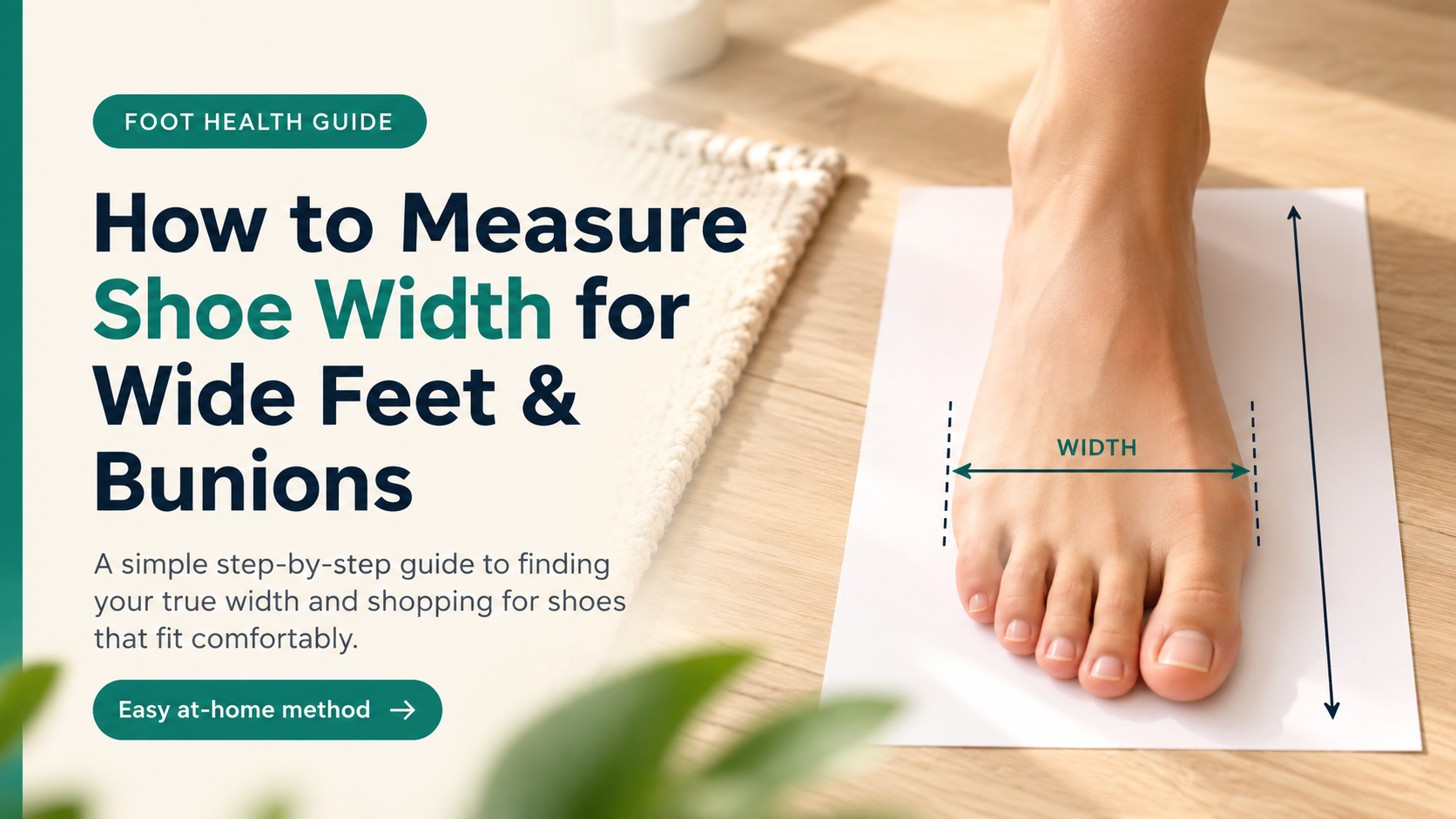
- Trace your foot. Stand on a sheet of paper and draw around your foot with your toes relaxed and spread.
- Compare the insole. Remove the shoe’s insole and place it on your tracing. If your toes spill over the edges, the shoe is too narrow.
- Check the shape. Look at the shoe from above. The widest point should be at the toes, not the middle of the shoe.
- Do the wiggle test. With the shoe on, you should be able to lift, spread and wiggle every toe freely.
- Leave thumb space. There should be roughly a thumb’s width between your longest toe and the end of the shoe.
What to Look for When Buying Wide Toe Box Shoes
- Foot-shaped design: the front should be broad and rounded, not pointed.
- Soft, flexible upper: breathable mesh or knit materials allow toes to move and expand.
- Enough toe-box height: a low ceiling can press on the tops of your toes.
- Secure midfoot and heel: a roomy front should be paired with a snug heel so your foot does not slide.
- Appropriate cushioning: choose the level that suits your activity, from minimalist to well cushioned.
- Return policy: always buy from stores that allow free returns so you can test fit at home.
Popular Wide Toe Box Shoe Options
Several footwear brands are well known for roomy, foot-shaped designs. Fit varies from person to person, so always check current reviews and sizing guides.
Altra – Best for Running and Everyday Training
Altra builds its shoes on a foot-shaped last with a broad toe box and zero-drop platform, which makes them popular with runners and walkers.
Xero Shoes – Best for Minimalist Comfort
Lightweight, flexible and very roomy in the toes, Xero Shoes suit people who want a close-to-barefoot feel for walking, casual wear and light workouts.
Vivobarefoot – Best for Natural Movement
Vivobarefoot designs thin, flexible shoes with a wide anatomical shape, ideal for those transitioning to more natural footwear.
Topo Athletic – Best for Cushioning With Room
Topo Athletic combines a roomy forefoot with a more cushioned, supportive ride, a good middle ground for people who find minimalist shoes too firm.
How to Switch to Wide Toe Box Shoes Comfortably
If you have worn narrow shoes for years, your feet may need time to adjust. Wear your new shoes for short periods at first, then increase the time gradually. If you move to a zero-drop or minimalist shoe, build up slowly to avoid calf and foot soreness. Strengthening exercises such as toe spreading and short-foot drills can also help.
Common Myths About Wide Toe Box Shoes
“They look bulky.” Modern designs come in sleek, stylish options for running, casual wear and even work settings.
“They are only for people with wide feet.” Not true. Even narrow feet have toes that need space to spread.
“My feet will slip around.” A good wide toe box shoe has a secure heel and midfoot, so only the toes get extra room.
Frequently Asked Questions
Is a wide toe box the same as wide-width shoes?
No. A wide-width shoe is wider overall, while a wide toe box is specifically shaped to give the toes more room. Some shoes are standard width but still have a roomy toe box.
Can a wide toe box fix bunions?
Shoes cannot reverse an existing bunion, but a roomy toe box can reduce pressure and discomfort. Speak with a podiatrist for personal advice.
Are wide toe box shoes good for flat feet?
Many people with flat feet find them comfortable because the toes can spread and support the foot. Some may still prefer extra arch support, so choose according to your needs.
Do wide toe box shoes run true to size?
Sizing differs by brand. Check the size guide, read reviews and take advantage of free return policies.
Can kids wear wide toe box shoes?
Yes. Children’s feet are still developing, so shoes that do not squeeze the toes are a sensible choice.
Final Thoughts
The importance of a wide toe box comes down to one idea: shoes should fit the shape of your foot, not force your foot to fit the shape of the shoe. Better balance, all-day comfort, reduced pressure on the toes and a more natural stride are all good reasons to give your toes room.
Use the five-step test, try a pair with free returns, and let your feet tell you the difference.
This article is for general information only and is not medical advice. If you have persistent foot pain, bunions, numbness or a medical condition such as diabetes, consult a podiatrist or healthcare professional.