



Disclosure: This article may contain affiliate links. If you buy through them, we may earn a small commission at no extra cost to you. We only recommend features and products that we believe can genuinely help.
If your shoes always feel tight across the sides of your feet, pinch around a bony bump at the base of your big toe, or leave red marks after a day of wear, the problem may not be your shoe length at all. It is often the shoe width. Many people buy the “right” size, yet still suffer because the shoe is simply too narrow for their foot shape.
This is especially common if you have naturally wide feet or a bunion (also called hallux valgus). Knowing exactly how to measure shoe width is the first step to finding shoes that feel comfortable from the moment you put them on. In this guide you will learn a simple at-home method, how to adjust it when you have a bunion, how to read width labels such as D, E and 2E, and what to look for when you shop.
Table of Contents
- Why shoe width matters
- What you need
- How to measure shoe width step by step
- How to measure width when you have a bunion
- Understanding shoe width labels
- A simple worked example
- Common measuring mistakes
- How to check the fit of a shoe
- Shoe features that help wide feet and bunions
- Tips for buying wide shoes online
- Frequently asked questions
Why Shoe Width Matters
Most people only think about shoe length, but width plays an equally important role in comfort. A shoe that is too narrow squeezes the forefoot, pushes the toes together and can rub against the sides of the foot. Over time, this can lead to:
- Blisters, calluses and corns on the sides of the foot or toes
- Pain or burning in the ball of the foot
- Irritated, inflamed or more painful bunions
- Numbness or tingling in the toes from constant pressure
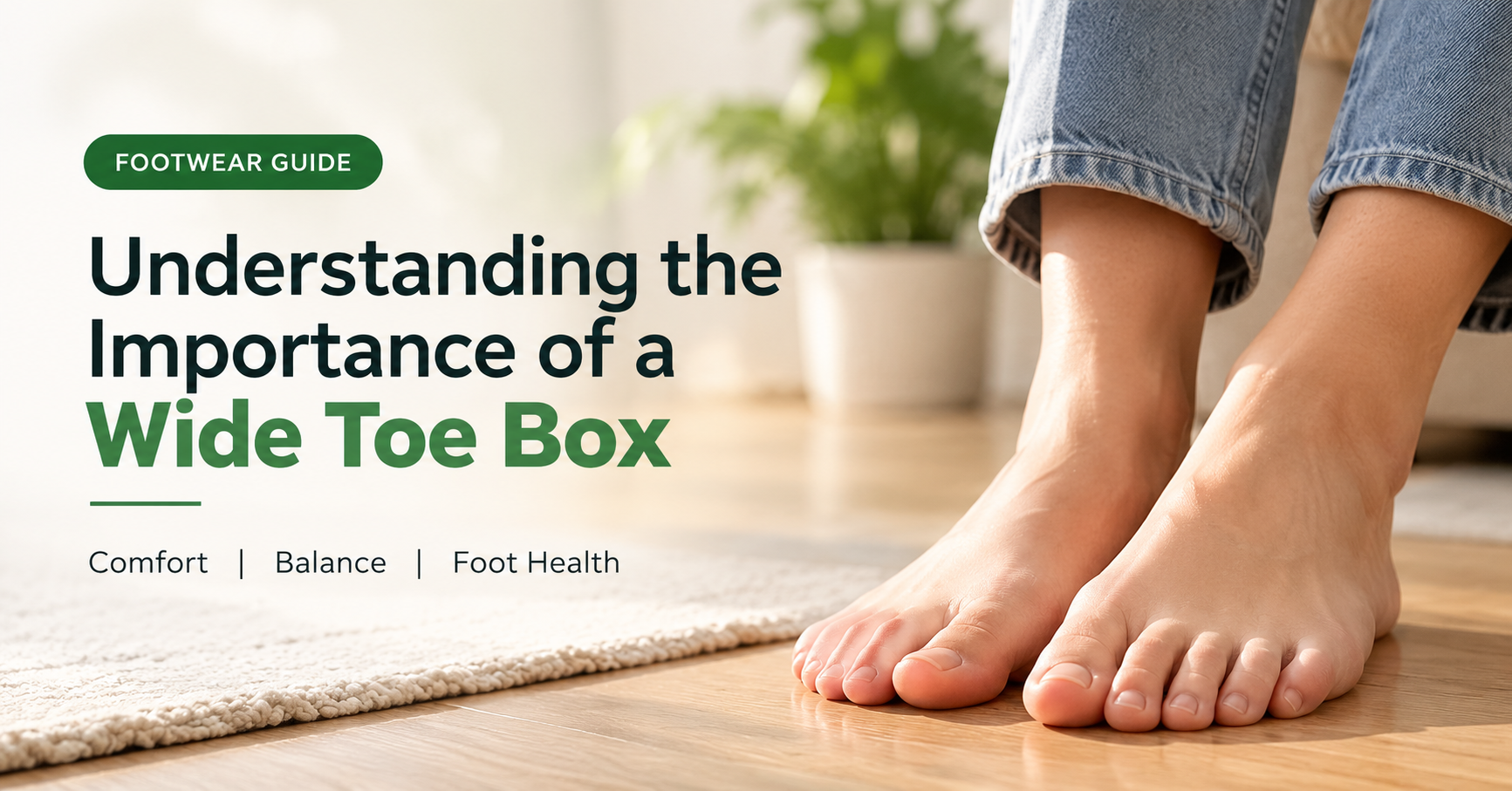
- Toes that cannot spread naturally, which affects balance and walking comfort
A bunion is a bony bump that forms at the joint at the base of the big toe, where the big toe may angle toward the other toes. Because that bump sticks out on the inner side of the foot, it makes the widest part of your foot wider than the ball of the foot alone. Standard narrow or medium shoes rarely leave enough room for it, which is why proper width measurement matters so much.
What You Need to Measure Your Shoe Width
You do not need special equipment. Gather these simple items:
- Two sheets of plain paper (larger than your foot)
- A pen or pencil
- A ruler or measuring tape (in millimetres or inches)
- The socks you normally wear with the shoes you plan to buy
- A hard, flat floor and a wall (to line up your heel)
- Optional: a friend to help you trace accurately
Best time to measure: Measure in the late afternoon or evening. Feet naturally swell during the day, so measuring when they are at their largest helps you avoid buying shoes that feel tight later.
How to Measure Shoe Width Step by Step

Step 1: Prepare your paper
Place a sheet of paper on a hard floor with one short edge against a wall. Avoid carpet, because a soft surface makes it harder to trace accurately.
Step 2: Stand or sit with your weight on your foot
Put on your usual socks. Place your heel against the wall and your foot flat on the paper. If you can, stand up with your weight evenly distributed, because your foot spreads out when it carries your weight. If standing is difficult, sit with your knee at a right angle and your foot flat.
Step 3: Trace the outline
Hold the pen straight up and down (not tilted under your foot) and trace carefully around your whole foot. A friend can make this much more accurate. Repeat for the other foot on a fresh sheet.
Step 4: Mark and measure the length
Step away and draw a straight line touching the back of the heel and another touching the tip of your longest toe (this is usually the big toe, but for some people it is the second toe). Measure the distance between the two lines.
Step 5: Mark and measure the width
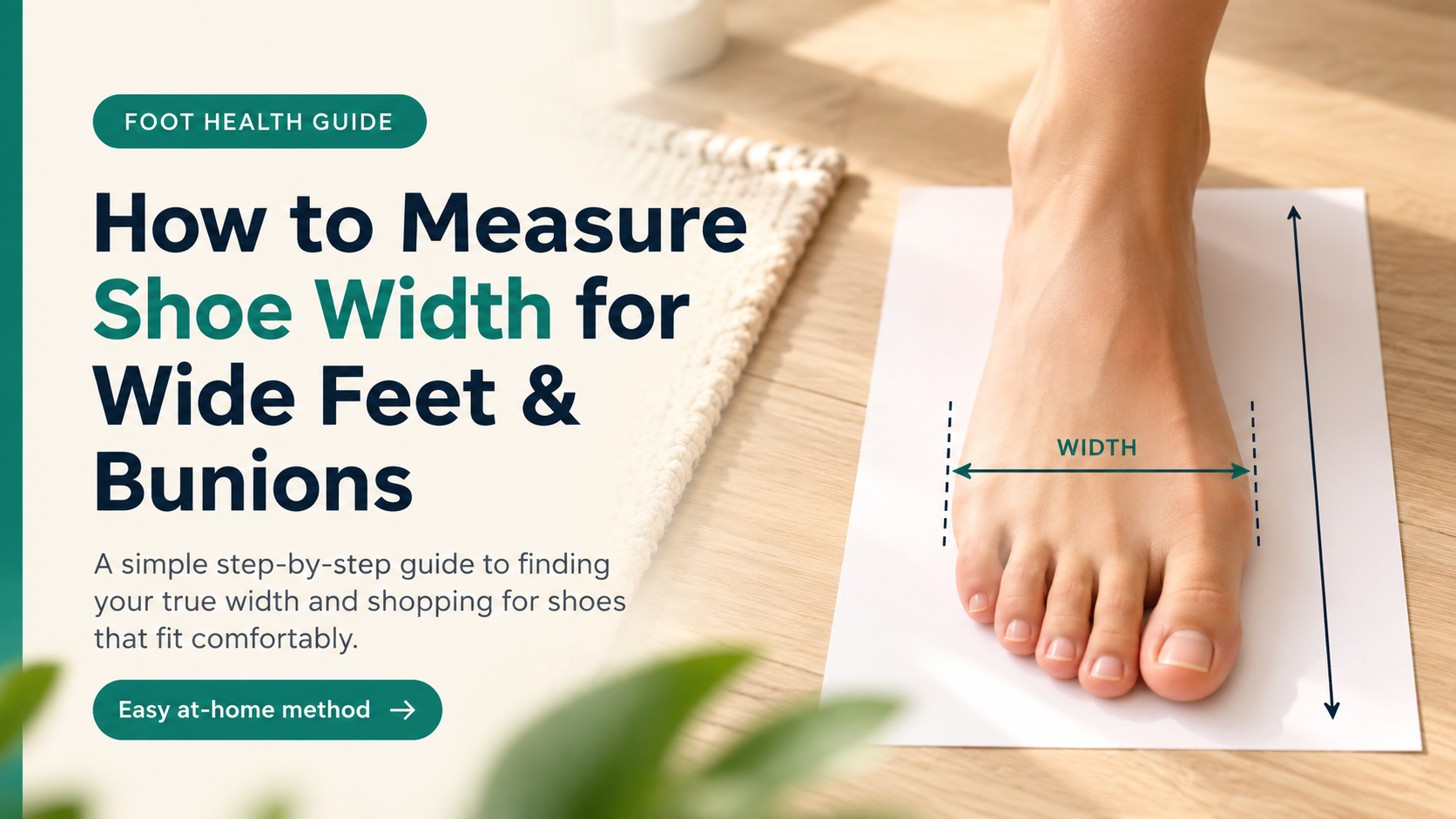
Find the widest part of the forefoot, around the ball of the foot. Draw a straight line on each side of that widest part, parallel to the length of your foot, and measure the distance between them. This is your foot width.
Step 6: Measure both feet and use the larger number
Most people have one foot slightly larger than the other. Always use the larger length and width when choosing a shoe size.
How to Measure Width When You Have a Bunion

The measuring method is the same, with one important difference: include the bunion in your measurement. Your shoe has to fit around the bump, not squeeze it. Here is what to do:
- Measure at the widest point, not only the “ball”. On a foot with a bunion, the widest part is usually the bump on the inner side of the big toe joint. Make sure your inner line touches the outer edge of the bunion.
- Trace while standing. A bunion can look and measure differently when it carries your weight.
- Measure both feet. Bunions often do not affect each foot equally. Use the wider foot.
- Also check the top of the foot. If the bunion is tender, note whether the area is raised or sore, because this tells you how soft and roomy the shoe upper needs to be.
- Consider the toe box shape. If your big toe angles inward, a pointed shoe will press on it even if the overall width is correct. Look for a toe box shaped like your foot.
Tip: If you are between two widths, go up to the wider one. It is easier to fill a little extra room with a thicker sock or insole than to stretch a shoe that is too tight.
Understanding Shoe Width Labels

Once you have your measurements, the next step is to match them to a width label. In US sizing, widths are shown as letters:
| Width | Women’s label | Men’s label |
|---|---|---|
| Narrow | 2A (AA) | B |
| Medium (standard) | B | D |
| Wide | D | E (2E) |
| Extra wide | 2E (EE) | 4E |
Each step between width labels adds roughly 3/16 inch (about 5 mm) of room across the ball of the foot, though the exact figure differs by brand. Width also changes with shoe length, so a size 11 “medium” is wider than a size 6 “medium”. For that reason, you should always compare your measurements with the size chart of the specific brand, which often lists width in millimetres or inches for each size.
Not every brand uses the same system. UK and European sizing may use fitting numbers or labels such as “wide fit”, “extra wide” or “H fit”. When in doubt, use the brand’s chart or contact their support team.
A Simple Worked Example
Let’s say you trace your wider foot and measure:
- Length: 10 inches
- Width at the widest point (including the bunion): 4.2 inches
First, check the brand’s chart to find the size that matches a foot length of about 10 inches (allowing for thumb-width extra room at the toe). Next, look at the chart’s width column for that size. If the chart says “Medium” is 3.9 inches and “Wide” is 4.1 inches for your size, your 4.2-inch measurement tells you that a wide or even extra wide shoe is the safer choice, particularly because a bunion needs room that goes beyond the measurement itself. (These numbers are only an example, so use the real chart for your chosen brand.)
Common Measuring Mistakes to Avoid
- Measuring only one foot. Always measure both.
- Measuring in the morning. Feet are at their smallest, so shoes may feel tight by evening.
- Tracing with a tilted pen. This makes the outline smaller than your foot.
- Ignoring the bunion. Measuring only the “ball” can give a result that is too small.
- Sticking to your old size. Feet can change with age, weight, pregnancy and activity, so re-measure at least once a year.
- Assuming every brand fits the same. A “wide” in one brand may feel different in another.
How to Check the Fit of a Shoe

A measurement gets you close, but the real test is how the shoe feels. When you try on a pair, check the following with both shoes on:
- Leave about a thumb’s width (roughly 1 cm or 3/8 inch) between your longest toe and the front of the shoe.
- Wiggle your toes. They should move and spread freely, without being pushed together.
- Check the bunion area. There should be no rubbing or pressure on the bump. The material should feel soft.
- Make sure the heel stays put. It should not slip, even if the front of the shoe is roomy.
- Walk around. The shoe should feel comfortable right away. Do not rely on “breaking them in”.
Shoe Features That Help Wide Feet and Bunions
Once you know your width, look for shoes with design features that reduce pressure on a bunion and give your forefoot room to spread:
- Wide or foot-shaped toe box: Gives your toes space and avoids pressing the big toe inward.
- Soft, stretchable upper: Materials such as stretch knit, soft leather or flexible mesh can move with the bunion instead of rubbing against it.
- Minimal seams over the bunion area: Fewer stitches and overlays means less friction on a sensitive spot.
- Adjustable closures: Laces, straps or hook-and-loop closures let you fine-tune the fit across the forefoot.
- Cushioned midsole and supportive sole: Helps absorb impact and reduces pressure on the front of the foot. Some people also find a rocker sole more comfortable when walking.
- Removable insole: Lets you swap in a custom or orthotic insole if your podiatrist recommends one.
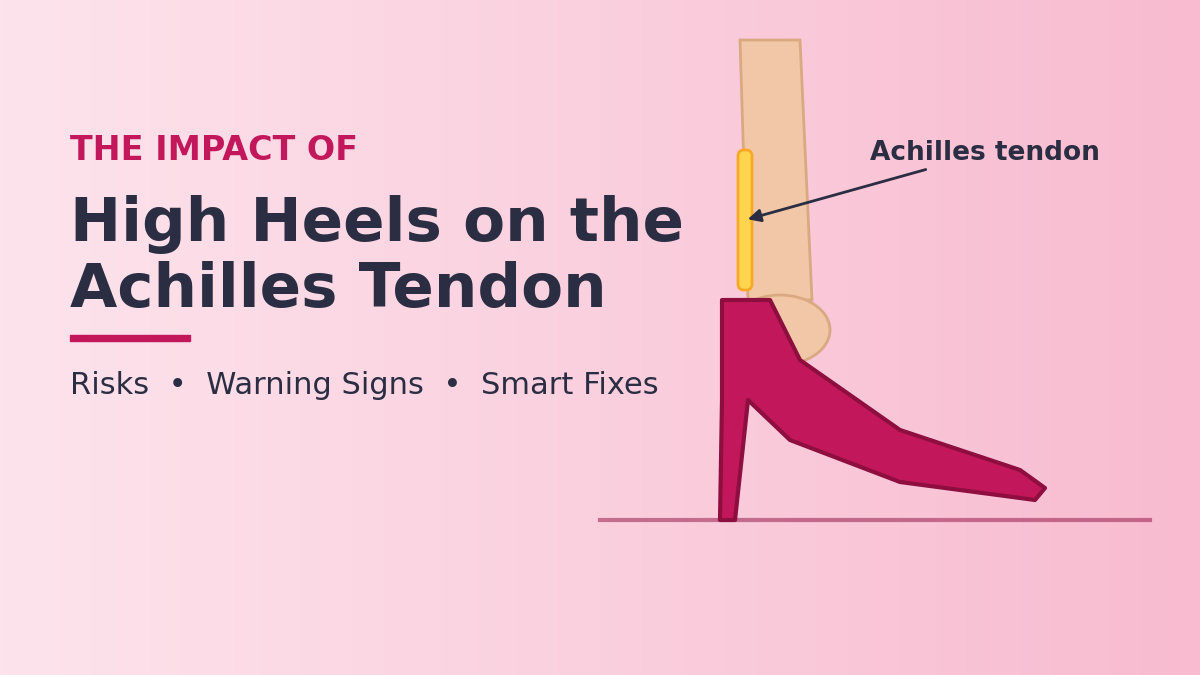
- Low heels: High heels push your weight forward onto the forefoot and make bunion pain worse.
Many well-known footwear brands now offer wide and extra-wide options in walking, running, casual and work shoes, and some design their shoes with a naturally roomy toe box. Compare a few options before you decide.
[Insert your affiliate product links / product boxes here – for example: wide walking shoes, wide running shoes, bunion-friendly sandals, bunion toe spacers, foot measuring tools]
Tips for Buying Wide Shoes Online
- Use your measurements together with the brand’s size chart, not just your usual size.
- Read customer reviews from people with wide feet or bunions and look for comments about toe box room and upper softness.
- Check the return and exchange policy before you order. A free-return policy lets you try shoes at home.
- Try shoes on indoors on a soft surface first, so you can return them if they are not right.
- Wear the socks you plan to use with those shoes during the try-on.
- If you are between sizes, go up in width rather than squeezing into a narrower shoe.
When to See a Foot Specialist
Measuring your feet at home and choosing better shoes can make a big difference, but it does not replace medical advice. See a podiatrist or healthcare provider if you have:
- Constant or worsening pain in the big toe joint
- Redness, swelling or warmth around the bunion
- Difficulty walking or finding any shoes that fit
- Numbness, tingling or open sores on the feet
- Diabetes or circulation problems together with foot discomfort
This article is for general information only and is not medical advice.
Frequently Asked Questions
How do I know if I have wide feet?
If shoes in your correct length feel tight across the sides, leave marks after wearing them or squeeze your toes together, you may have wide feet. Tracing your foot and comparing the width measurement with a brand size chart is the most reliable way to confirm it.
What is the easiest way to measure shoe width at home?
Trace your foot on paper while standing, then measure the widest part of the forefoot with a ruler. Compare that number with the width chart of the brand you want to buy from. Doing it in the evening and measuring both feet gives the best result.
Should I buy wide shoes if I have a bunion?
Most people with bunions are more comfortable in shoes with a wider and deeper toe box and a soft upper. Even if your foot measures in the medium range, the bunion may need extra space, so wide fit options are often worth trying.
Is it better to go up a size or buy a wider width?
If the problem is tightness across the sides, a wider width is usually better. Going up a full size adds length but not always the width you need, and it can cause heel slipping or a shoe that feels too long.
Can shoe width change over time?
Yes. Feet can become wider with age, weight changes, pregnancy and activity, and a bunion can grow gradually. Re-measuring once a year is a good habit.
Can I stretch shoes that are too narrow?
A shoe stretcher or a professional cobbler can stretch some leather shoes a little. But if a shoe is clearly too narrow, it is better to choose a wider size than to rely on stretching.
Final Thoughts
Learning how to measure shoe width takes only a few minutes, yet it can save you from months of discomfort. Trace your foot while standing, measure at the widest point (including any bunion), compare the numbers with the brand’s size chart and choose shoes with a roomy toe box and a soft upper. With the right width, your shoes should feel comfortable from the first step.
If you found this guide useful, share it with someone who struggles to find shoes that fit, and check our recommendations for wide-fit shoes below.